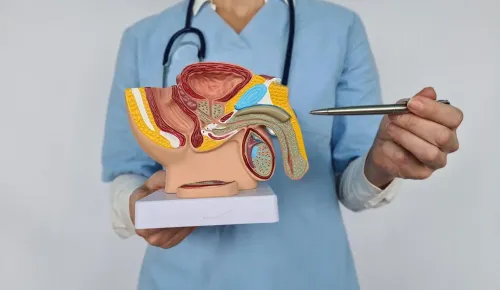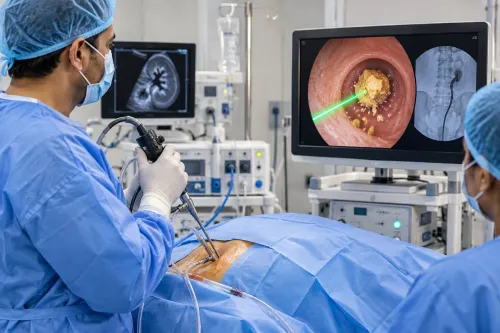
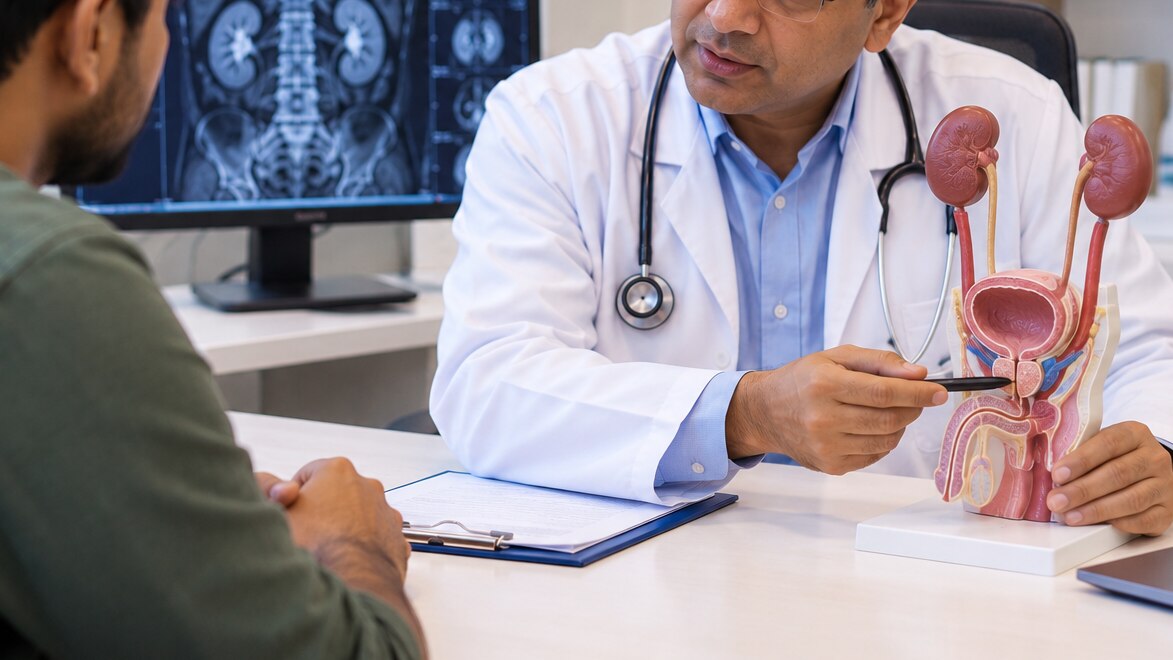
A first urology visit usually starts with questions, records, and a focused examination—not an immediate procedure. Bring the right information, describe your symptoms precisely, and understand what each proposed test is meant to clarify so you can take part in decisions about your care.
Key takeaways
- Bring a dated symptom record, medication list, and previous reports.
- Describe changes in urination, pain, sexual health, and daily activities clearly.
- Ask why each test is needed and how to prepare for it.
- Seek urgent care for inability to urinate, severe pain, fever, or blood clots.
What should you bring and how should you describe your symptoms?
A first urologist consultation is easier when you replace “I have urinary problems” with a dated symptom record. Note when symptoms began, whether they are constant or intermittent, and how they affect sleep, work, travel, sex, or exercise.
1. Record urinary symptoms: frequency, urgency, nocturia, weak stream, hesitancy, intermittency, incomplete emptying, leakage, burning, visible blood, and pain’s exact location and character. A bladder diary can capture fluid intake, voiding times, approximate volumes, nighttime trips, and leakage. The clinician may also ask you to complete the IPSS symptom score.
2. What to bring to a urologist includes prior scans, laboratory reports, a medication list with doses, surgical history, allergies, and family history of kidney disease, urinary cancers, prostate disease, or reproductive problems. List non-urology medicines too: diuretics, antihistamines, decongestants, opioids, and some psychiatric medicines can worsen urinary symptoms or cause retention.
3. For reproductive concerns, bring prior semen analyses and fertility-treatment records. Write down contraception use, infections, ejaculation and erection problems, and how long you have tried to conceive. Mention that semen results can vary between ejaculates, so one abnormal analysis may need confirmation.
Bring questions about what each examination or test is intended to assess. You can request privacy, a chaperone, an explanation before each step, or a pause during the appointment.
What happens during the consultation and examination?
Expect a detailed history before any procedure. The clinician will ask about medical conditions, urinary symptoms, sexual function, erections, ejaculation, fertility, infections, previous surgery, and medicines. Blood pressure, temperature, weight, or other findings may be checked because diabetes, hypertension, obesity, smoking, and cardiovascular disease affect urinary and reproductive health.
A urology physical examination is tailored to your complaint rather than performed as a fixed checklist.
| Examination | What it assesses | When it applies |
|---|---|---|
| Abdominal examination | Tenderness, a persistently full bladder, or a mass | Pain, difficulty emptying, swelling, or suspected obstruction |
| Genital examination | Penis, testes, epididymis, hernias, swelling, infection, or other abnormalities | Testicular pain, infertility, erectile or ejaculatory concerns, penile symptoms, or suspected infection |
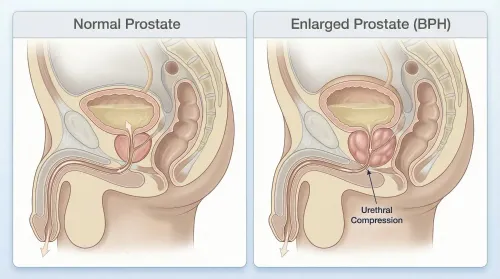
| Digital rectal examination | Prostate size or tenderness, pelvic-floor findings, and selected bowel or neurologic signs | When those findings could change diagnosis or treatment; it is not automatic |
Ask what each examination is intended to assess before it begins. Chaperone and consent are part of the process: request privacy, a chaperone, an explanation of each step, a pause, or another clinician when available. You can decline an examination and ask what information postponing it would leave unknown.
Discuss erectile or reproductive concerns directly. Medication effects, depression, sleep disorders, diabetes, vascular disease, and high blood pressure can contribute, so assessment may involve general health rather than only the genital examination.
Which tests might be ordered, and how do you prepare?
Testing is selective, not automatic. Your symptoms, examination, medical history, and treatment decision determine which results are worth obtaining. Ask whether each proposed test result would change management.
| Test | What it checks | Preparation or limitation |
|---|---|---|
| Urinalysis | Blood, protein, glucose, white cells, infection indicators | Give a clean-catch midstream sample unless instructed otherwise: clean the area, start urinating, then collect. |
| Urine culture | Bacteria when infection is suspected | It is not required for every consultation. |
| Serum creatinine | Kidney function | Blood test; medicines and dehydration can affect interpretation. |
| PSA test | Prostate-related risk | Ask about PSA test preparation and limitations. Benign enlargement, prostatitis, ejaculation, bicycling, and recent urinary manipulation can raise it; an abnormal result is not a cancer diagnosis. |
| Uroflowmetry and residual scan | Urine-flow rate and urine left after urination | One elevated residual does not establish retention; bladder fullness and timing affect the reading. |
| Ultrasound or noncontrast CT | Structural problems or suspected stones | Ultrasound may require a full bladder. CT is highly accurate for stones but uses ionizing radiation. |
| Cystoscopy | Urethra and bladder lining | Used for indications such as hematuria, suspected narrowing, recurrent infection with an anatomic concern, or selected persistent symptoms. |
| Fertility tests | Semen quality and reproductive hormones | Ask about two to seven days of sexual abstinence, accepted collection method, and confirmation of an abnormal result. |
Follow the clinic’s instructions for fasting, medication changes, or a full bladder. Bring questions about whether a result would alter treatment before agreeing to testing.
Is the appointment for diagnosis, treatment, or possible surgery?
A consultation is not a commitment to treatment or surgery: it gathers your history and examination findings, while a diagnostic work-up adds targeted tests and a treatment appointment addresses an established problem.
| Appointment type | Main purpose | What may happen |
|---|---|---|
| Consultation | Understand the problem | Symptom review and physical examination |
| Diagnostic work-up | Identify causes, measure severity, or rule out danger | Urinalysis, imaging, cystoscopy, blood tests, or semen testing |
| Treatment appointment | Choose management for a known diagnosis | Medication, monitoring, a procedure, or surgery |
Hematuria evaluation is risk-based. Age, sex, smoking exposure, persistent or microscopic blood levels, and other urothelial-cancer risks determine whether you need repeat urinalysis, kidney-and-bladder ultrasound, CT urography, cystoscopy, or a combination. Seeing a urologist does not mean you need an operation.
For suspected stones, imaging depends on pregnancy, age, radiation concerns, kidney function, and the suspected stone’s location. Ultrasound avoids radiation; noncontrast CT gives highly accurate information about stone size and position.
Semen analysis interpretation requires context because results vary between ejaculates. An abnormal first analysis is commonly repeated and considered alongside both partners’ fertility evaluation.
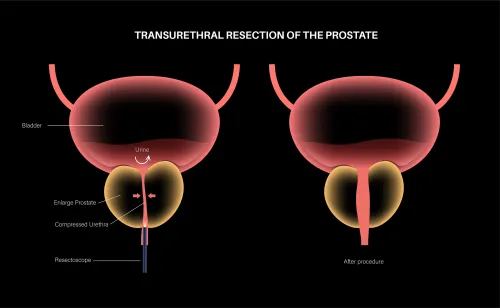
The urology treatment options for obstruction or stones include observation, medication, shock-wave treatment, endoscopic treatment, laser techniques, and other surgery. The choice depends on anatomy, stone or prostate size, complications, bleeding risk, fertility goals, recovery demands, and your preferences.
Before agreeing, ask about benefits, alternatives, limitations, discomfort, infection, bleeding, and whether the result would change management.
What happens after the first visit, and when is urgent care needed?
Once reports are available, the urologist conducts a test result review by connecting each finding to your symptoms, examination, medical history, and preferences. Ask which findings require action now, which can be monitored, and when the follow-up discussion will occur; some decisions can wait for complete results.
Before leaving, ask for:
- Copies of laboratory and imaging reports
- The working diagnosis and medication instructions
- Warning signs and a contact number
- The next appointment date and its purpose
When to seek urgent urological care depends on the symptom, not on your scheduled urology follow-up.
| Symptom | What it may indicate | What to do |
|---|---|---|
| Unable to urinate | Acute urinary retention | Seek urgent assessment |
| Severe flank pain with fever or chills | Infected urinary obstruction | Go to emergency care promptly |
| Sudden painful, swollen testicle | Testicular torsion | Seek immediate emergency assessment |
| Heavy blood in urine or blood clots | Significant bleeding or blockage | Seek urgent assessment |
| Confusion, faintness, severe weakness, or other systemic illness | Serious infection or blood loss | Obtain emergency medical care |
If a procedure is proposed, ask why it is recommended, what alternatives exist, and whether another opinion would help. A minimally invasive treatment decision should reflect anatomy, risks, kidney function, fertility goals, and your preferences—not simply the availability of laser treatment.
Dr. Vivek Jadhav Laser Stone and Urology Clinic may be relevant for coordinated urinary, prostate, stone, or male reproductive assessment, but the consultation should establish the appropriate treatment rather than assume it.
Frequently asked questions
What should you bring to a urologist consultation?
Bring a dated symptom record, medication and supplement list, previous test reports, imaging discs or links, and details of relevant surgeries or medical conditions.
What happens during a urologist examination?
The urologist reviews your symptoms and history, checks your abdomen and urinary system, and performs a genital, rectal, or pelvic examination when the symptoms require it.
Which tests might a urologist order?
Possible tests include urinalysis, urine culture, blood tests, ultrasound, uroflowmetry, post-void residual measurement, semen analysis, or other targeted investigations.
Is the first urologist visit for diagnosis or surgery?
The first visit usually focuses on assessment and diagnosis. Your urologist explains treatment choices, including medicines, observation, procedures, or surgery when indicated.
When should urinary symptoms receive urgent care?
Seek urgent care for inability to urinate, severe or sudden testicular pain, heavy bleeding or blood clots, fever with urinary symptoms, or severe flank pain with vomiting.