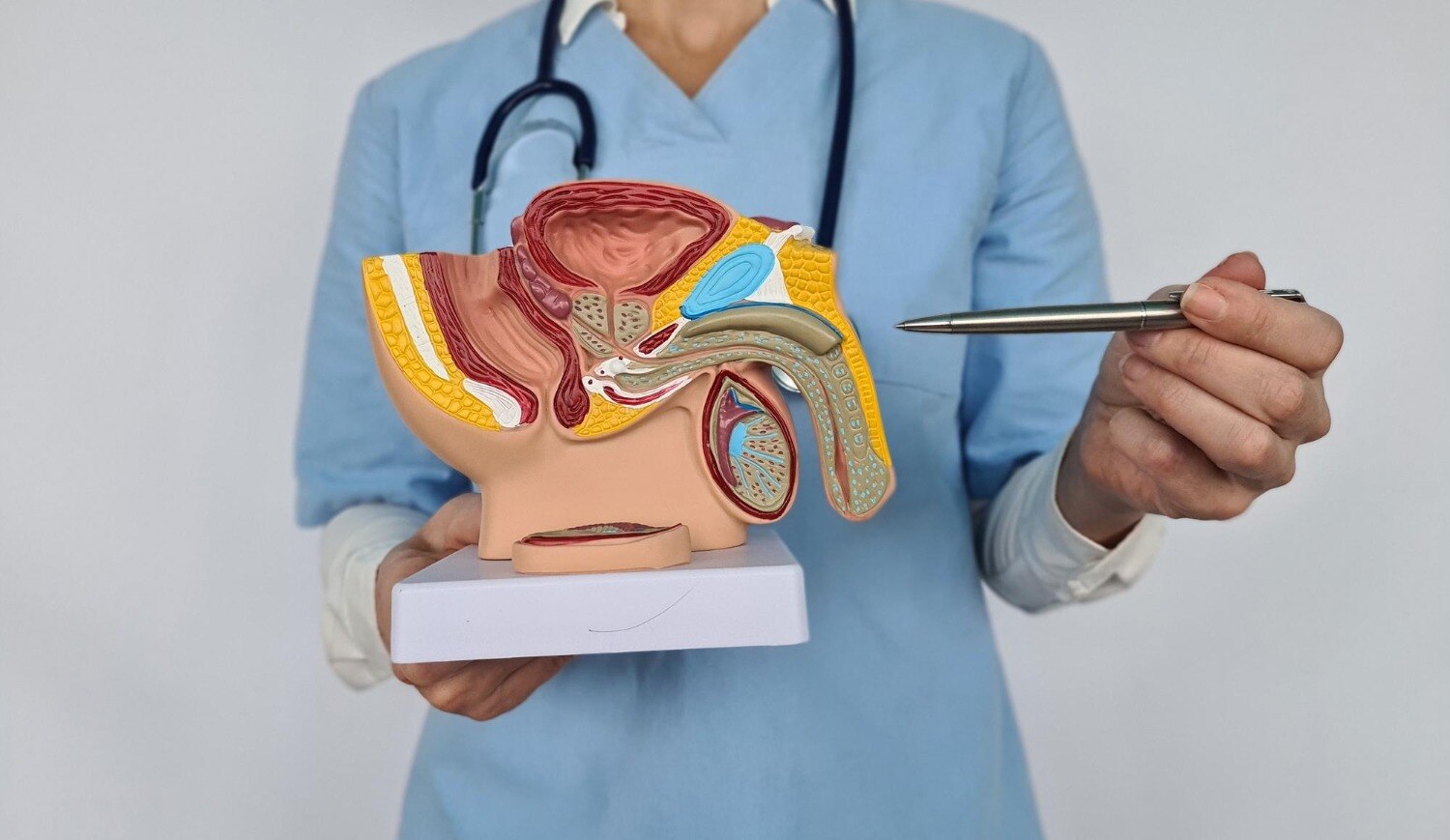
Needing to urinate often and producing a weak stream are different symptoms, and neither one proves that an enlarged prostate is responsible. By tracking the pattern, recognising urgent warning signs, and understanding the tests and treatment thresholds, you can have a more useful discussion about whether medication, monitoring, or a procedure is appropriate.
Key takeaways
- Record frequency, urgency, leaks, and nighttime urination for three days.
- Weak flow can result from causes other than prostate enlargement.
- Seek urgent care if you cannot urinate or have severe pain, fever, or blood.
- Compare monitoring, medication, and procedures after testing identifies the cause.
What Your Urinary Pattern Is Telling You
Record your urinary pattern for three days before an appointment. Note how often you urinate during the day, each episode of night-time urination, the urgency, and whether you leak before reaching the toilet.
Also record:
- Hesitancy: delay before urine starts
- Straining to begin or maintain the stream
- Interrupted flow that stops and starts
- Weak urine flow or a thinner stream than before
- Dribbling after you finish
- A sensation that your bladder has not emptied
- The approximate amount of urine and your evening fluid, caffeine, and alcohol intake
Frequent urination means you are passing urine more often than usual; it does not describe the force of the stream. A weak urine flow means urine comes out slowly or with reduced pressure. You can have one without the other, or both together.
| Symptom | What it describes | What it may suggest |
|---|---|---|
| Frequent urination | Repeated trips to the toilet, including increased daytime frequency | High fluid or caffeine intake, diabetes, infection, overactive bladder, or poor emptying |
| Night-time urination | Waking to urinate once or more after going to bed | Evening fluids, sleep disturbance, diabetes, overactive bladder, or incomplete emptying |
| Weak urine flow | Slow, narrow, interrupted, or low-pressure stream | Possible obstruction, urethral stricture, bladder weakness, or prostate-related changes |
Neither symptom proves benign prostatic hyperplasia. Infection, medicines, constipation, neurological disease, and other conditions can produce the same pattern. A diary showing timing, volumes, urgency, and leakage gives a clinician more useful information than “I go often.”
Why Weak Flow Is Not Automatically a Prostate Problem
Weak flow can come from problems outside the prostate, while frequency and urgency often reflect bladder irritation or excess urine production. BPH is common with age, but prostate size does not reliably predict obstruction: an enlarged prostate may not block urine, while a smaller prostate can obstruct through muscle tightening or bladder-neck changes.
Possible causes include:
- Urethral stricture, in which scar tissue narrows the urine channel and produces a thin, spraying, or interrupted stream.
- Bladder muscle weakness, which leaves urine behind and causes repeated trips, hesitancy, straining, and dribbling.
- Prostatitisï, or inflammation of the prostate, which can cause urgency, frequency, painful urination, and difficulty starting.
- Urinary infection or bladder stones, which irritate the bladder and can interrupt flow.
- Overactive bladder, diabetes, or high fluid and caffeine intake, which can drive frequency without causing true obstruction.
- Neurological disease, constipation, or medicines such as antihistamines, decongestants, and some antidepressants, which can disrupt bladder emptying.
- Prostate cancer, which cannot be confirmed or excluded from urinary symptoms alone.
A post-void residual measurement shows how much urine remains after you urinate, but a high result does not prove that BPH caused it. Infection, medication effects, neurological disease, or weak bladder contraction can produce the same finding. Persistent or worsening symptoms need an evaluation that separates obstruction from poor bladder function.
When Urinary Symptoms Need Urgent Care
Inability to pass urine, especially with a painful or swollen lower abdomen, is urinary retention and needs emergency assessment. Do not keep drinking water or wait for a routine appointment; acute retention often requires bladder drainage, followed by testing for the cause and a plan to prevent recurrence.
Seek prompt medical care for:
- fever or chills with burning, urgency, frequency, or weak flow
- flank pain with vomiting or fever
- significant visible blood in urine, particularly with clots
- confusion, severe weakness, or rapidly worsening urinary symptoms
| Symptom | Level of care | What may happen |
|---|---|---|
| Inability to urinate or painful bladder distension | Emergency department now | A catheter may drain the bladder and relieve pressure |
| Fever or chills with urinary symptoms | Same-day assessment | Urine testing and antibiotics may be needed for infection |
| Flank pain with vomiting or fever | Urgent assessment | A kidney infection or obstructed stone needs prompt treatment |
| Visible blood in urine or clots | Prompt assessment | Clinicians must exclude bleeding, infection, stones, and other causes |
Do not assume blood came from an enlarged prostate. Repeated retention, infections, bladder stones, persistent bleeding attributed to prostate enlargement, or kidney impairment can make a procedure more urgent even after the immediate crisis settles.
How Doctors Find the Cause and Decide Whether Treatment Is Needed
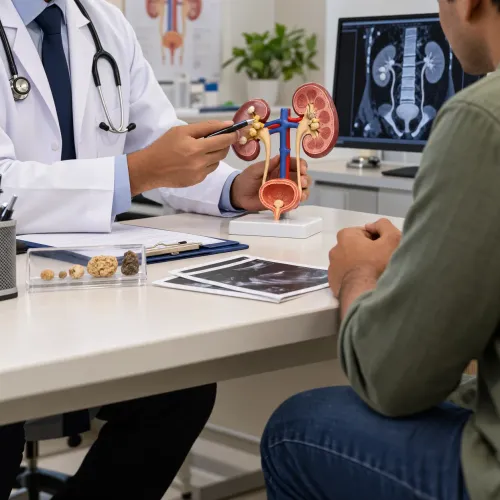
Doctors decide based on the cause, symptom burden, bladder emptying, and complications—not the stream alone. Ask about timing, urgency, nighttime urination, fluids, caffeine, constipation, medicines, and neurological symptoms. A voiding diary helps when frequency or nocturia dominates.
The evaluation commonly includes:
- A physical examination, including a digital rectal examination when appropriate, to assess the prostate and other findings.
- Urinalysis to detect blood, infection, or other urinary clues.
- Blood glucose testing when diabetes could explain frequent urination.
- Kidney-function testing when retention, kidney disease, or upper-tract damage is a concern.
- A post-void residual measurement, using ultrasound or catheterisation, to show how much urine remains.
A high residual does not prove prostate obstruction. Weak bladder contraction, infection, medicines, and neurological disease can produce the same result. Urodynamic pressure-flow testing is reserved for uncertain cases, mismatched symptoms and prostate findings, or situations where invasive treatment requires proof of obstruction.
| Finding | Usual next step | What changes the plan |
|---|---|---|
| Mild symptoms, low residual, no complications | Fluid and caffeine changes, monitoring, or medicine | Reassess if bother or emptying worsens |
| Persistent symptoms despite medicine or unacceptable side effects | Discuss another medicine or a procedure | Treatment choice depends on obstruction and prostate findings |
| Recurrent retention, urinary infections, bladder stones, BPH-related visible blood, or kidney damage | Stronger consideration of a procedure | Drain the bladder promptly during acute retention, then address recurrence risk |
A procedure becomes more compelling when symptoms remain disruptive despite appropriate medication or when BPH damages the bladder or kidneys. Doctors investigate other causes before attributing every weak stream to the prostate.
Medication, Monitoring, or a Prostate Procedure: Comparing the Choices
Mild, tolerable symptoms without complications can be managed with watchful waiting: review symptoms periodically, time fluids, and reduce caffeine or alcohol. Treatment is driven by bother, emptying, complications, and your priorities—not prostate size alone.
| Option | Main benefit | Limits and when it fits |
|---|---|---|
| Watchful waiting | Avoids drug and procedure risks | Suitable when symptoms are manageable and there is no retention, recurrent infection, bladder damage, or kidney impairment |
| Medicines | Alpha-blockers such as tamsulosin act relatively quickly; finasteride or dutasteride can shrink an enlarged prostate over months. Tadalafil may improve urinary symptoms, while a beta-3 agonist or anticholinergic targets urgency and frequency | Alpha-blockers do not shrink the prostate and can cause dizziness or ejaculation changes. Finasteride and dutasteride can affect sexual function and lower PSA by about 50% after six months. Check bladder emptying before adding storage-symptom drugs because retention can worsen |
| TURP | Removes obstructing prostate tissue through the urethra and has a long record of use | It involves bleeding, catheterisation, irritative symptoms, ejaculation changes, incontinence risk, and possible retreatment |
| Laser procedures | Laser vaporization ablates tissue; laser enucleation separates and removes the obstructing adenoma more completely | Choice depends on prostate anatomy and size, surgeon expertise, anticoagulants, equipment, and your priorities; the same recovery and sexual-function trade-offs need discussion |
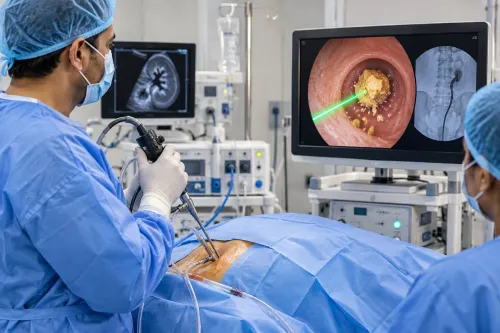
Ask for specialist discussion when medicines fail, symptoms restrict daily life, or retention, recurrent infections, stones, bleeding, or kidney effects develop. At Dr. Vivek Jadhav Laser Stone and Urology Clinic, the useful question is which endoscopic option matches your prostate anatomy and bleeding risk—not simply whether a laser is available.
Frequently asked questions
Does weak urine flow always mean an enlarged prostate?
No. Weak flow can also result from a urethral stricture, urinary infection, bladder problems, medicines, or nerve-related conditions. Testing helps identify the cause.
When do frequent urination and weak flow need urgent care?
Seek urgent care if you cannot pass urine, have severe lower abdominal or back pain, see blood in your urine, or develop fever with urinary symptoms.
How do doctors investigate frequent urination and weak urine flow?
Doctors review your three-day urinary record, medicines, and medical history, then choose examinations and tests based on your symptoms. These can include urine testing, a prostate assessment, flow measurement, and a bladder scan for urine left after urination.
How do doctors choose between prostate medication and a procedure?
The decision depends on symptom severity, test results, prostate and bladder findings, complications, treatment response, and your preferences. Mild or stable symptoms may suit monitoring, while persistent obstruction or complications can require medication or a procedure.