
Blood in the urine, painful urination, a weak stream, recurrent infections and sexual or fertility problems do not all require the same specialist or the same urgency. Use the pattern, duration and warning signs to decide whether to monitor briefly, book a urologist, contact another doctor or seek same-day emergency care.
Key takeaways
- Book a urologist visit for persistent, recurring, or disruptive urinary symptoms.
- Seek same-day emergency care for severe pain, fever, vomiting, or inability to urinate.
- Arrange assessment after any visible blood in urine, even if it happens once.
- Bring your medication list, medical history, and symptom timeline to the appointment.
Which urinary symptoms justify booking a urologist?
Book a routine urology appointment when urinary, prostate, sexual or fertility symptoms persist, recur, or interfere with daily life. Blood in urine needs assessment even after one episode of visible hematuria; microscopic hematuria also deserves follow-up, with testing based on age, smoking history, persistence and other risk factors.
Arrange a review for:
- Burning urination that does not resolve after evaluation or returns repeatedly
- Recurrent urinary tract infections, infection in a man, kidney infections, or infections that respond poorly to treatment
- A weak or interrupted stream, straining, frequent nighttime urination, urgency, or leakage
- Pelvic, bladder, flank or prostate-area pain without a clear explanation
- Persistent erectile difficulty, painful erections, reduced libido or a sudden change in sexual function
- Difficulty conceiving, abnormal semen results, testicular concerns or a desire for fertility assessment
| Symptom pattern | Why a urologist may help | Routine appointment applies when |
|---|---|---|
| Persistent weak stream or incomplete emptying | Prostate enlargement, narrowing or bladder dysfunction may be involved | You can still pass urine and have no severe pain or fever |
| Recurrent burning urination | Infection, stone, irritation or an anatomical problem may be recurring | Symptoms return or remain after appropriate treatment |
| Erectile or fertility difficulty | Vascular, hormonal, medication, testicular or reproductive causes need different tests | The problem persists, causes distress or affects conception |
Sudden inability to urinate, severe sudden testicular pain, fever with flank pain, vomiting or heavy clots in urine need same-day care rather than a routine booking.
Which symptoms need same-day emergency care?
Do not wait for a routine appointment if you have inability to pass urine, severe uncontrolled pain, fever, confusion, or repeated vomiting. These patterns can signal obstruction, infection, dehydration, or kidney injury and need same-day assessment.
| Symptom | Why it is urgent | What to do |
|---|---|---|
| Inability to pass urine | Acute urinary retention can overstretch the bladder and damage the kidneys. | Go to an emergency department for prompt assessment and bladder drainage, often with a catheter. |
| Fever with flank pain | An infected, blocked kidney can deteriorate quickly; antibiotics alone may not clear the obstruction. | Seek emergency care. Urgent drainage with a ureteral stent or nephrostomy may be needed. |
| Vomiting with suspected obstruction | You can become dehydrated while a blocked ureter continues to threaten kidney function. | Go to the emergency department, especially with stone pain, reduced urine, or fever. |
| Severe sudden testicular pain | Testicular torsion cuts off blood flow and can permanently damage the testicle. | Attend an emergency department immediately; do not schedule a routine urology visit. |
| Heavy blood clots in urine | Clots can block urine flow and cause retention. | Seek same-day emergency care. |
| Confusion or marked weakness with urinary infection symptoms | This can indicate a serious infection, particularly in an older adult. | Get urgent medical assessment. |
A single functioning kidney, pregnancy, known kidney impairment, or inability to keep fluids down lowers the threshold for emergency review. A stone without these warning signs can sometimes be observed, but worsening pain, infection, obstruction, or falling kidney function changes the decision.
Does the problem belong with a urologist or another specialist?
The best first stop depends on the symptom pattern, not its location alone. Kidney-stone pain usually causes severe, wave-like flank pain that may travel toward the groin, while musculoskeletal back pain changes with movement or pressing the area.
Burning urination and frequency fit a urinary infection or bladder irritation, but persistent, recurrent, or bloody symptoms need urologic assessment.
| Pattern | Better first contact | Why |
|---|---|---|
| Mild first urinary infection symptoms without fever, flank pain, vomiting, or retention | General physician | They can test urine, prescribe treatment, and refer you when infections recur or fail to clear. |
| Vaginal discharge, itching, vulvar pain, bleeding, or pelvic symptoms linked to menstruation or pregnancy | Gynecologist | These features point toward genital or reproductive causes rather than the urinary tract. |
| Protein in urine, swelling, high blood pressure, declining kidney function, or abnormal kidney blood tests | Nephrologist | These suggest kidney tissue disease, not only a blockage or stone. |
| Fever or chills with flank pain, confusion, uncontrolled pain, repeated vomiting, or inability to pass urine | Emergency department | An infected obstruction or acute urinary retention can damage the kidney and needs immediate treatment. |
| Weak stream, dribbling, nocturia, recurrent infections, blood in urine, or suspected prostate-related obstruction | Urologist | The cause could be prostate enlargement, urethral narrowing, bladder disease, or cancer, not automatically an enlarged prostate. |
| Rectal bleeding, pain with bowel movements, new constipation, or a bowel-related pelvic ache | Colorectal specialist | These symptoms arise from the bowel or anus, although urinary and bowel problems can overlap. |
A urologist is also the right route for recurrent stones, persistent bladder irritation, or infections in men when an underlying structural problem needs investigation.
Why age and medical history lower the threshold for review
Prompt assessment matters more when your kidneys have less reserve, infection can worsen quickly, or an underlying condition changes the risk. Mild burning, reduced urine, flank discomfort, or repeated infections deserves earlier review in these situations:
| Factor | Why the threshold is lower | What to do |
|---|---|---|
| Older age | Prostate obstruction, urinary retention, kidney disease, and urinary-tract cancer become more important possibilities. | Arrange assessment promptly for new symptoms, especially a weak stream or blood in urine. |
| Diabetes | Infection can spread faster, nerve damage can reduce bladder emptying, and diabetes can damage kidney function. | Contact a clinician early for new urinary symptoms or reduced output. |
| Solitary kidney | A blockage or infection affects your only functioning kidney. | Seek same-day medical advice for flank pain, fever, vomiting, or a noticeable drop in urine. |
| Pregnancy | A urinary infection or obstruction can threaten your health and complicate pregnancy care. | Report urinary burning, fever, flank pain, or blood in urine promptly. |
| Known kidney impairment | Dehydration, infection, or obstruction can cause a faster decline in kidney function. | Do not wait for symptoms to become severe. |
| Prior stones | A new episode can obstruct the ureter, and recurrent stones often need prevention planning. | Arrange review for recurring pain, blood in urine, or urinary symptoms. |
Prior pelvic surgery, cancer treatment, testicular disease, neurological illness, or medicines that affect bladder emptying also justify earlier review. Persistent erectile or fertility problems deserve assessment sooner after prior cancer treatment, absent sperm, testicular problems, or sexual dysfunction rather than waiting for age-based timelines.
What happens at a urologist visit, and which tests might you need?
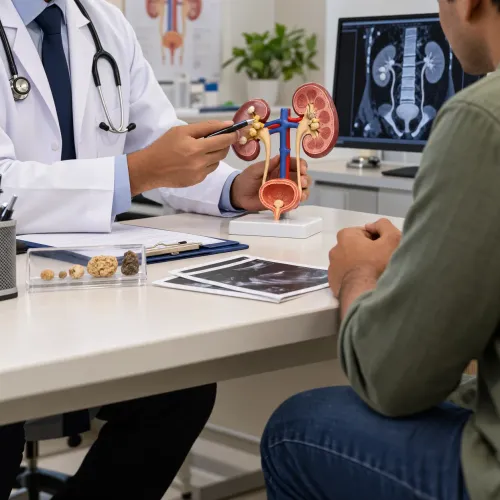
A urologist starts with your symptom history: onset, pattern, pain, medications, previous infections, stone reports, operations, sexual symptoms, and fertility goals. Expect a genital examination when pain, swelling, erectile difficulty, or infertility is involved, and a prostate examination when urinary obstruction or prostate disease is suspected. Urine testing can detect infection, blood, or protein.
| Main concern | Tests a urologist may choose | What the test helps answer |
|---|---|---|
| Burning, urgency, recurrent infection, or blood | Urinalysis, urine culture, blood tests, ultrasound, cystoscopy | Is there infection, bleeding, blockage, or a bladder lesion? |
| Stone pain or suspected obstruction | Kidney-function blood test, ultrasound, non-contrast CT | Where is the stone, how large is it, and is urine flow blocked? |
| Weak stream or incomplete emptying | Uroflowmetry and post-void residual bladder scan | How forcefully do you urinate, and how much urine remains? |
| Erectile or reduced-libido symptoms | Blood pressure, glucose or HbA1c, testosterone and medication review | Could vascular disease, diabetes, hormones, drugs, or stress contribute? |
| Fertility concerns | Semen analysis, hormone tests, genital examination, scrotal ultrasound | Are sperm production, sperm delivery, or testicular structure affected? |
Choose a service that can interpret your imaging, arrange urine culture and laboratory tests, perform endoscopy when indicated, and explain observation versus intervention.
For stone or prostate decisions, Dr. Vivek Jadhav Laser Stone and Urology Clinic is one option to assess if it can provide that complete review rather than offering a procedure before confirming the cause.
Related services
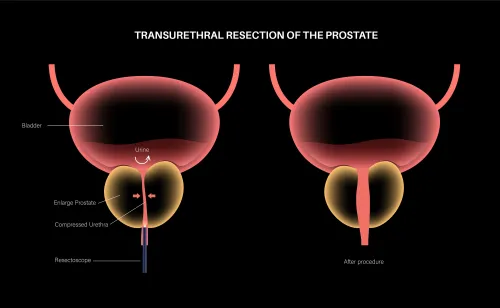
Laser and endoscopic treatment of kidney stone Laser and endoscopic treatment of kidney stone A complete endoscopic prostate surgery typically refers to a minimally invasive procedure known as transurethral resection of the prostate (TURP). View service → |
LASER AND COMPLETE ENDOSCOPIC TREATMENT OF URETERIC STONES LASER AND COMPLETE ENDOSCOPIC TREATMENT OF URETERIC STONES Ureteric or Ureteral stones are the kidney stones that get stuck in one or both ureters. View service → |
Frequently asked questions
Which urinary symptoms justify booking a urologist?
Book an appointment for persistent, recurring, or disruptive urinary symptoms, urinary leakage, sexual or fertility concerns, or any blood in urine. Visible hematuria needs assessment after one episode; microscopic hematuria needs follow-up based on risk factors and persistence.
Which urinary symptoms need same-day emergency care?
Seek same-day emergency care for inability to urinate, severe or uncontrolled flank pain, fever with urinary symptoms, repeated vomiting, confusion, or heavy blood clots in urine.
Should I see a urologist or another specialist?
A urologist assesses urinary tract, kidney stone, prostate, sexual, and male fertility problems. A primary-care doctor can evaluate mild or unclear symptoms, while urgent symptoms require emergency care.
Why do age and medical history affect the need for urology review?
Age, smoking history, previous urinary cancers or stones, recurrent infections, kidney disease, and persistent microscopic hematuria can raise concern and lower the threshold for specialist testing.
What happens at a urologist visit, and which tests might I need?
The visit usually includes a symptom history, medication review, physical examination, and urine testing. Depending on your symptoms, the urologist may order blood tests, ultrasound, CT, cystoscopy, uroflowmetry, or prostate assessment.
Related services
Complete endoscopic Prostate surgery with laser Complete endoscopic Prostate surgery with laser Complete endoscopic Prostate surgery with laser A complete endoscopic prostate surgery typically refers to a minimally invasive procedure known as... View service → |
LASER & COMPLETE ENDOSCOPIC TREATMENT OF BLADDER STONES LASER & COMPLETE ENDOSCOPIC TREATMENT OF BLADDER STONES Bladder stones are hard masses of minerals that form stones in bladder. View service → |
Prostate Cancer surgery and treatment Prostate Cancer surgery and treatment Prostate cancer surgery typically involves the removal of the prostate gland and surrounding tissue. View service → |