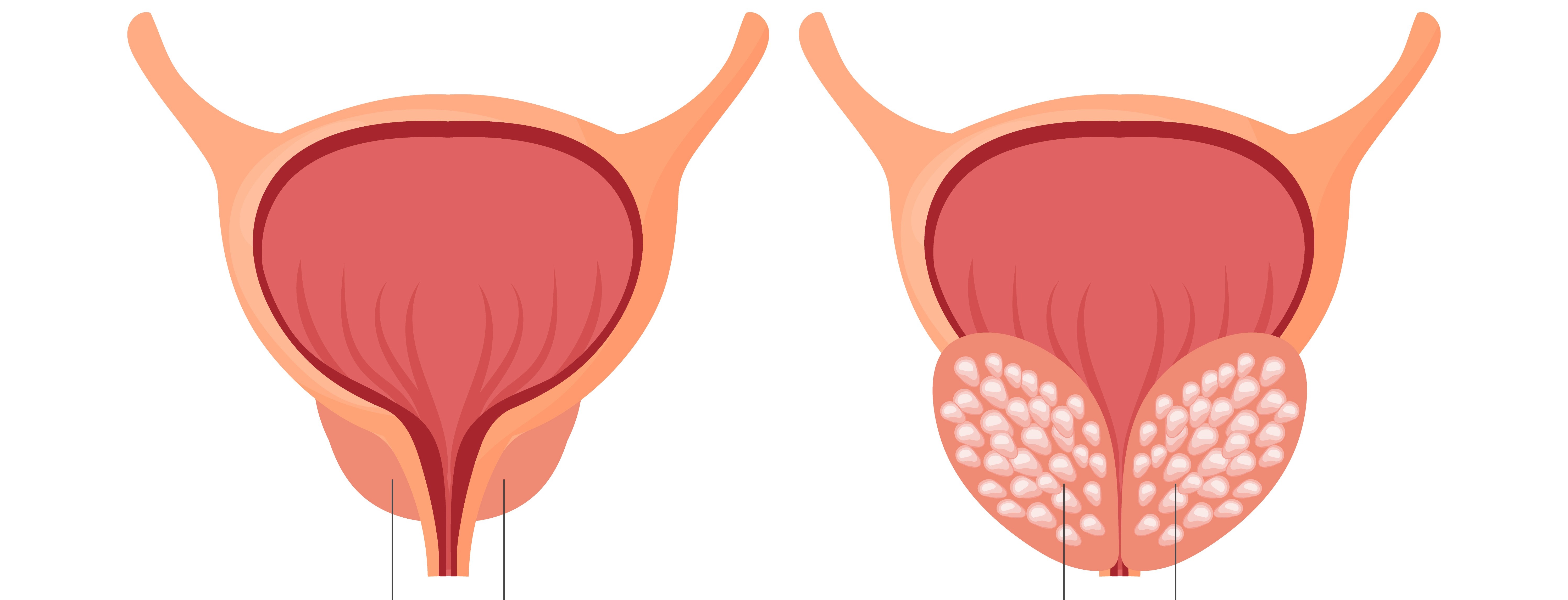
Waking several times at night to urinate, waiting for the urine stream to start, and feeling that the bladder has not emptied can gradually become part of a man's routine. These symptoms may be associated with Benign Prostatic Hypertrophy, commonly discussed clinically as benign prostatic enlargement or benign prostatic hyperplasia.
For men in Thane West, Maharashtra, the important question is not simply whether the prostate is enlarged. It is whether enlargement is interfering with urinary function and whether treatment is needed.
Look Beyond Prostate Size
A larger prostate does not always produce severe symptoms, while some men with less enlargement can experience troublesome urinary obstruction.
Assessment therefore focuses on symptoms and their impact.
Common concerns include:
- Slow urine stream
- Hesitancy
- Straining
- Urinary urgency
- Frequent urination
- Repeated nighttime urination
- Incomplete bladder emptying
Sudden inability to urinate is urinary retention and requires prompt medical assessment.
What a Specialist Checks Before Treatment
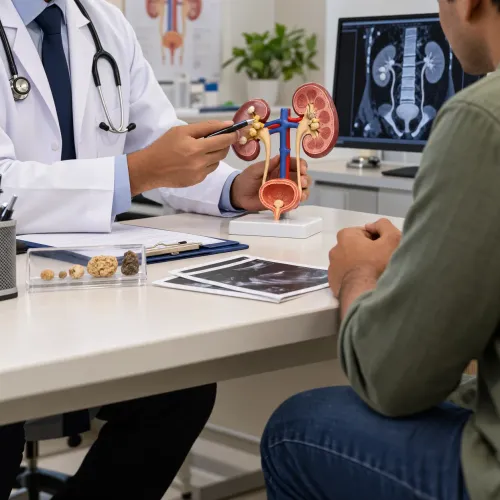
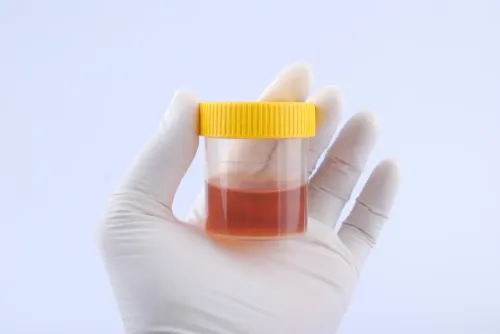
Evaluation may include a symptom history, examination, urine test, kidney function tests, ultrasound, urinary flow testing, and measurement of residual urine after bladder emptying.
Other investigations may be recommended depending on age, findings, and individual risk factors.
This assessment also helps distinguish benign prostate enlargement from other conditions that can cause similar urinary symptoms.
Choosing Between Monitoring and Medication
Men with mild symptoms and no concerning complications may sometimes be monitored. Practical measures such as reviewing evening fluid intake and medications that influence urination may help selected patients.
Medicines can be used to improve urine flow or influence prostate-related obstruction. The choice depends on symptoms, prostate characteristics, other medicines, blood pressure, and potential side effects.
Medication should therefore be individualized.
When Procedural Treatment Becomes Relevant
A procedure may be discussed when medication is ineffective or poorly tolerated, symptoms substantially affect quality of life, or complications such as repeated retention develop.
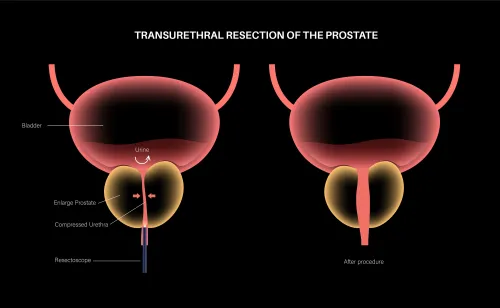
TURP is one established treatment for benign prostate obstruction. Other procedural options may also be considered according to prostate anatomy, availability, and individual suitability.
Patients should understand what tissue is treated, what improvement is expected, and whether the procedure may affect ejaculation or other aspects of urinary and sexual function.
Recovery and Risks
After an endoscopic prostate procedure, temporary catheterization may be required. Frequency, urgency, burning, and mild blood staining can occur while the urinary tract heals.
Possible procedural risks include bleeding, infection, urinary difficulties, urethral narrowing, changes in ejaculation, and other procedure-specific complications.
Frequently Asked Questions
Is benign prostate enlargement cancer?
No. Benign prostate enlargement is not prostate cancer, although appropriate evaluation may still be necessary when symptoms or clinical findings warrant it.
Can medication avoid surgery?
Many patients obtain symptom relief with medication, but response varies.
Should nighttime urination automatically be blamed on the prostate?
No. Nocturia can have several causes, so assessment should consider the broader clinical picture.
Dr. Vivek Jadhav Laser Stone and Urology Clinic in Thane West provides evaluation for men whose prostate-related urinary symptoms have begun interfering with sleep, bladder emptying, or everyday activities.
Keywords