
Seeing red, pink, or brown urine can be alarming, particularly when there is no pain. Blood in urine is a symptom rather than a diagnosis, and identifying its source is important because the possible causes range from urinary infection and stones to prostate, kidney, or bladder conditions.
Patients in Thane West, Maharashtra, should avoid assuming that visible bleeding is harmless simply because it occurs once and then disappears.
Painful and Painless Bleeding Can Mean Different Things
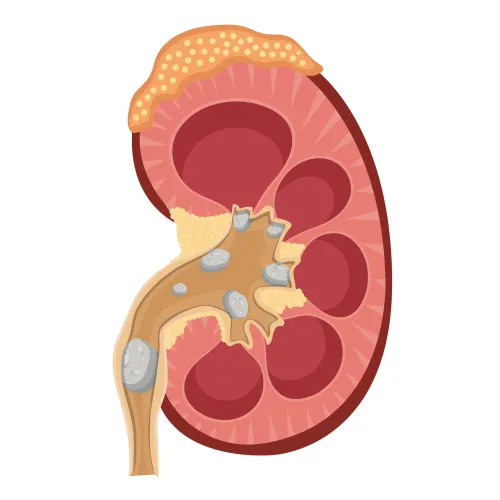
Blood accompanied by severe flank pain may occur with a urinary stone. Burning and frequency can suggest infection. Prostate conditions can also cause urinary bleeding.
Painless visible blood can occur with several conditions and deserves evaluation even when the person otherwise feels well.
The colour of urine alone cannot reliably identify where bleeding originates.
What Information Helps During Assessment
A doctor may ask:
- Was the blood visible throughout urination?
- Were clots present?
- Was there flank or abdominal pain?
- Was urination painful?
- Has this happened previously?
- Is there a history of stones?
- What medicines are being taken?
- Is there a history of urinary procedures?
- Are there other urinary symptoms?
Medication history is particularly important, but blood-thinning medication should not automatically be assumed to be the sole explanation without appropriate assessment.
Investigations Depend on the Patient
Urine analysis may confirm blood and provide information about infection. Blood tests can assess kidney function and other relevant parameters.
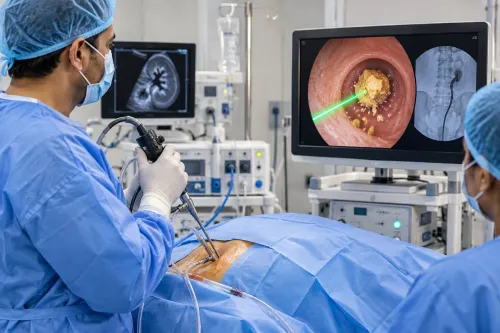
Ultrasound or CT imaging may be recommended to examine the urinary tract. In selected patients, cystoscopy allows the inside of the bladder and urethra to be examined directly.
The exact combination of investigations depends on age, symptoms, medical history, and clinical risk.
Treatment Depends Entirely on the Cause
There is no single treatment for haematuria.
An infection may require appropriately selected medication. A problematic urinary stone may require stone treatment. Prostate-related bleeding requires assessment of the underlying prostate condition. Other abnormalities need treatment tailored to their diagnosis.
This is why treating the colour change itself without identifying the source can delay appropriate care.
Recovery and Potential Risks
Recovery depends on the diagnosis and intervention required. Diagnostic tests may require little or no downtime, while endoscopic or surgical treatment has procedure-specific recovery requirements.
Risks also vary. Cystoscopy can cause temporary urinary burning and carries a small risk of infection, while stone or prostate procedures have their own potential complications such as bleeding, infection, urinary discomfort, or need for additional treatment.
Frequently Asked Questions
Can strenuous exercise cause blood in urine?
Exercise can occasionally be associated with haematuria, but visible or recurrent blood should not simply be attributed to exercise without evaluation.
What if the urine becomes clear again?
An episode of visible bleeding can still warrant investigation even if it stops.
When is immediate care particularly important?
Heavy bleeding, large clots, inability to pass urine, severe pain, fever, faintness, or significant weakness require prompt assessment.
Dr. Vivek Jadhav Laser Stone and Urology Clinic in Thane West evaluates haematuria by looking for its source across the urinary system rather than treating blood in urine as a diagnosis by itself.
Keywords