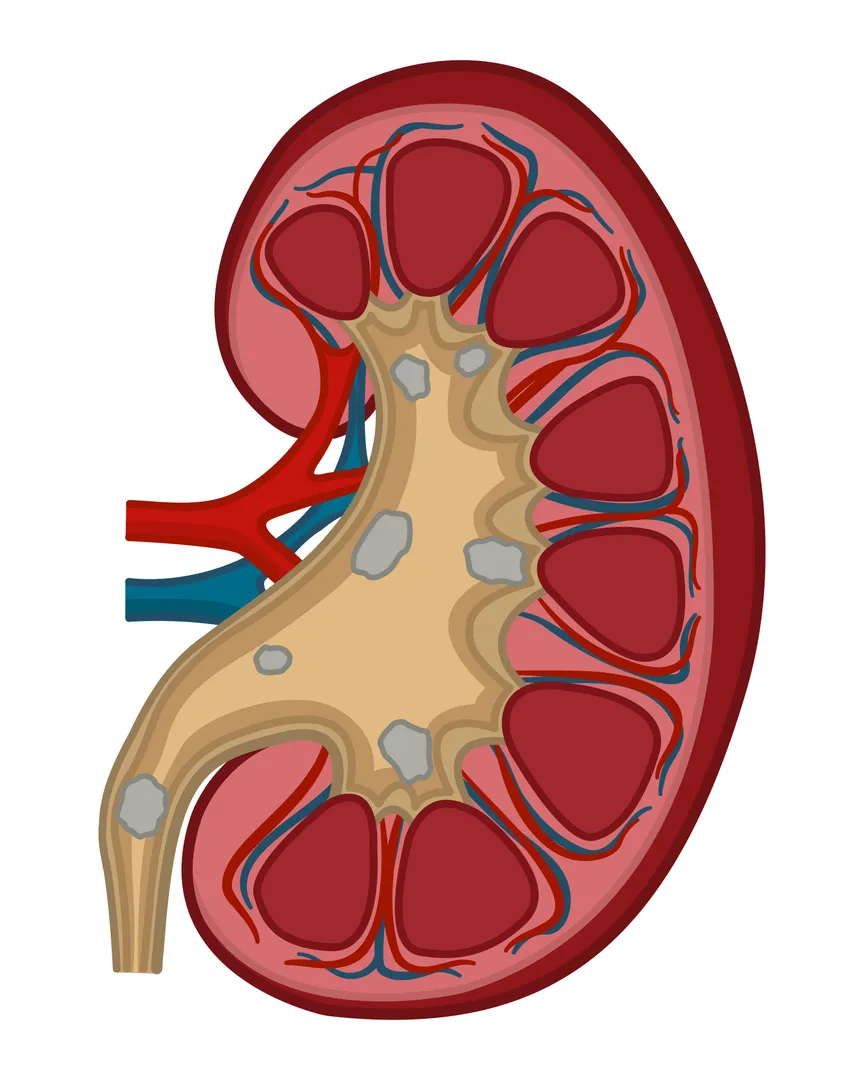
A kidney stone diagnosis does not automatically mean major surgery. Advances in endoscopic urology have made it possible to manage many stones through techniques that use natural urinary passages or small access routes.
However, minimally invasive kidney stone treatment is not a single procedure, and the right approach depends on the stone and the patient's clinical situation.
First Decide Whether Intervention Is Needed
Some kidney stones can pass without a procedure.
Observation may be appropriate when the stone has a reasonable chance of spontaneous passage and there are no concerning complications.
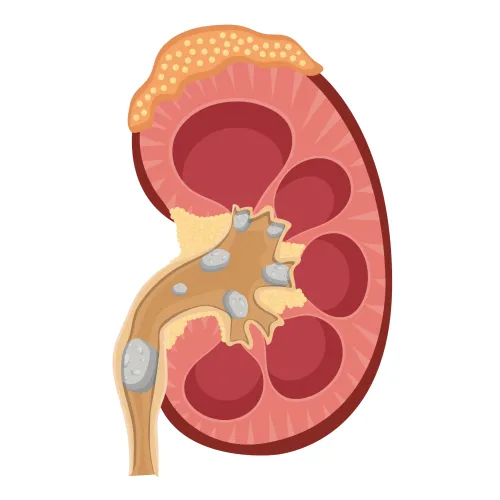
Active intervention becomes more relevant when there is persistent obstruction, repeated severe pain, infection risk, impaired kidney drainage, increasing stone burden, or a stone that is unlikely to pass.
Individual health circumstances also influence the decision.
Ureteroscopy Can Reach Selected Stones
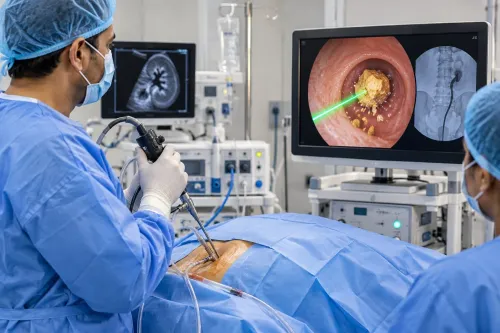
Ureteroscopy involves passing a thin endoscopic instrument through the urinary passage and bladder into the ureter. Depending on the stone's location, the surgeon can visualise and treat it.
Laser energy may be used to fragment a stone into smaller pieces. Some fragments can be removed during the procedure, while very small fragments may pass afterward.
A temporary ureteric stent may be placed in selected patients to support urine drainage during recovery.
Flexible Endoscopy Can Treat Kidney Stones
Flexible endoscopic instruments can reach areas within the kidney that cannot be accessed in the same way with rigid instruments.
This approach may be considered for selected renal stones based on their size, number, position, anatomy, and other clinical factors.
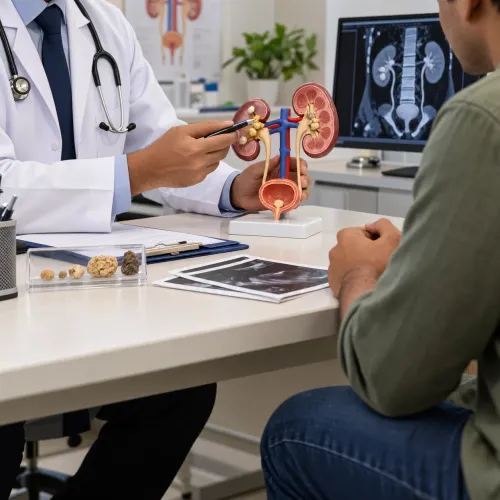
Patients should understand that the suitability of an endoscopic procedure depends on imaging rather than simply requesting a particular technology.
Larger Stones May Need Another Approach
For larger or complex kidney stones, a percutaneous procedure may sometimes be more appropriate.
This technique accesses the kidney through a small tract created through the back. The stone can then be fragmented and removed.
Although the access route is relatively small compared with traditional open surgery, it remains a surgical procedure with specific indications and potential risks.
Benefits Depend on Appropriate Patient Selection
Potential advantages of minimally invasive techniques can include smaller access routes, targeted stone treatment, and recovery profiles that differ from traditional open surgery.
Yet 'minimally invasive' does not mean risk-free.
Possible issues vary by procedure and can include bleeding, infection, temporary discomfort, ureteric injury, residual fragments, and the need for additional treatment.
A detailed discussion before intervention helps establish realistic expectations.
Questions Worth Asking Before Treatment
Patients can ask about the planned procedure, why it suits the particular stone, anaesthesia, expected hospital stay, possibility of a stent, expected recovery, follow-up imaging, and likelihood of requiring another procedure.
At Dr. Vivek Jadhav Laser Stone and Urology Clinic in Thane West, patients can be evaluated for kidney stone management according to imaging findings and clinical circumstances.
The main consideration should be suitability rather than simply choosing the newest procedure. Minimally invasive treatment can be valuable when appropriately indicated, but selecting the technique requires careful assessment of stone size, position, anatomy, kidney drainage, infection status, and the patient's overall condition.
Keywords